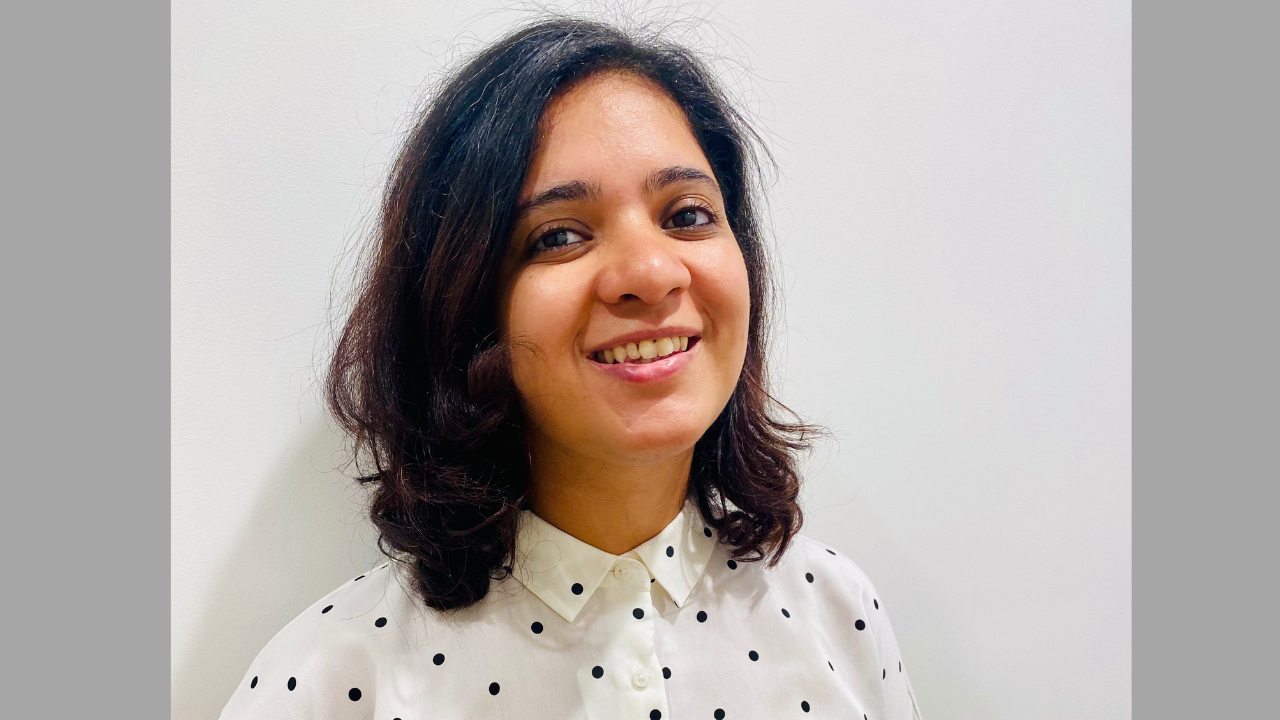
In an era where narratives can shape policy, influence behaviour and define institutional credibility, communication is no longer a support function, it is a strategic imperative. In an exclusive interview with Wealth Spark, Swati Malhotra, a development communications specialist with experience across global organisations such as World Bank, Airbnb and CGIAR, shares how the role of communication is rapidly evolving in today’s complex, high-stakes environment.
From building scalable content strategies for millions of users in India to shaping narratives around food systems, public policy and international development, Swati’s journey highlights the growing importance of clarity, cultural nuance and strategic thinking.
Malhotra reflects on her transition into development communications, the lessons from working across sectors, and why asking the right questions remains at the heart of impactful storytelling. She also offers a grounded perspective on AI, emphasising that while tools can enhance efficiency, it is human judgment and voice that ultimately build trust and drive meaningful engagement.
Q1) What sparked your interest in communications for international development, and is there a personal story behind how you entered the field?
Communication is the bridge between the internal workings of any organization with the external world. It is the connective tissue of any organization. And a single lapse creates major reputational and opportunity risks that are hard to recover from. I’ve always been curious about how people, organizations, and governments communicate, and what happens when they do it well or badly.
My origin story starts in India: advertising, a tech startup, Airbnb. Here I learned on the job how to build narratives that make people stop and pay attention. But I wanted to understand communication at a larger scale, in contexts where the stakes were higher. This question took me to Washington DC for a master’s in Strategic Communication. I didn’t have a plan on what city or what country I would land in but I was clear that I wanted to explore communications studies as a subject. And that’s where everything shifted. As part of my course, I studied public diplomacy and intercultural communication. I looked for electives that would add more value to my own understanding of the world and took a development communications class . This one elective opened a new door and it reoriented how I saw the world and my place in it.
While I was still studying and interning at Weber Shandwick (a global communications agency) as a Public Affair intern, I was offered a Communications Consultant role at the World Bank, supporting PASET — an initiative driving socioeconomic transformation in Sub-Saharan Africa through STEM scholarships. I said yes, and I never really looked back. From there I went on to work in food and agriculture policy, supporting communications for projects in low- and middle-income countries. One elective class leading to a 6+ years long career in international development is a fun story to look back at and share.
Q2) What skills do you think are most critical for succeeding in communications roles within organizations like the World Bank, Airbnb or CGIAR?
The most critical skill is also the most underrated: asking the right questions before you start planning or write a single word. What are we trying to do? Why does it matter? Who does it matter to? What happens if we don’t communicate this well or at all? These questions seem basic, but skipping them is where most communications efforts go wrong.
The second skill is positioning communications as a strategic partner, not a support desk. This looks different depending on where you are. At Airbnb, speed and instinct mattered most. I built a content strategy for the India team in two months flat. At the World Bank, I inherited a communications vacuum: no official channels, no established presence. So I asked my team one question: “what’s already reaching our member countries and partners”?
The answer was the internal newsletter. That became the entire engine. I promoted it as the primary vehicle for PASET’s communications, community-building, and stakeholder engagement, built on practically no resources. At CGIAR, the questions shifted again. Take leading event planning and supporting events for instance. Some questions I always asked included: “what outcome are we trying to achieve with this event?”, “when and where is the event taking place?”, “who’s in the room?”, “what do they care about?”, “does the venue even have reliable internet?” Each context demanded a different set of questions, but the instinct was always the same, to understand what each stakeholder or intended audience values before you decide how to reach them.
In short: curiosity first, strategy second, execution third. In that order, always.
Q3) AI tools are transforming content creation and strategy. How are you leveraging or planning to leverage AI in development communications, and where do you draw the line?
To be honest, I’m somewhat skeptical of the prevailing narrative here that AI tools are transforming content creation and strategy. These tools are useful, but the promise being sold far outpaces the reality. There’s a lot of generic and undifferentiated content out there, and the risk in communications is real: everything starts to sound polished, and nothing sounds distinct and personable. In a field like international development, where trust, nuance, and authentic voice are everything, that’s a problem worth taking seriously.
That said, I do use AI selectively. My go-to is Claude. I use it mostly as a thinking partner and sometimes to tighten my writing, but not as a generator for any written response. I use it to stress-test my logic, and find gaps before I commit to an argument. An example of this is this answer. I asked Claude to find gaps in this response and it suggested I introduce an example to strengthen the argument (I like to be meta occasionally). The writing, the judgment, the editorial instinct: all of these stay human.
That said, there is a lot of potential and upside to using different AI tools. I’ve noticed a surge in simple videos generated with the help of AI to explain technical concepts, and the output does justice to the content. AI can also expedite time-intensive processes like audience research and translation.
Where I draw the line is clear. No sensitive information goes into any AI tool, full stop. International development work is full of it in different forms like unpublished research, donor relationships, community data, political context. That boundary is non-negotiable.
Q4) Development comms requires turning complex technical work into compelling narratives. What’s the toughest challenge you’ve faced in this at the World Bank or CGIAR, and how did you overcome it?
The toughest challenge in development communications isn’t the complexity of the subject. but the fact that “complex” means something different for every audience in the room. At CGIAR, I once rewrote the same food security brief three times: once for a donor update, once for a partner government, and once for a social post. The only thing the three versions had in common was the data. And that’s why a technical summary that satisfies a researcher will leave a donor cold. While the content remains the same; the entry point has to change every time. Before I write anything, I ask myself one question: what does this specific person need to walk away knowing, and what can I leave out without losing them?
My answer to this sounds deceptively simple: shorter sentences. But it’s genuinely an art, especially for people trained to think in the long, layered prose of academic and policy writing. Children naturally break ideas into digestible pieces because they have to. They write to the edge of their understanding. Adults forget to do that. We pack too much into a single sentence and call it sophistication.
At CGIAR, explaining agrifood systems and food security to a room full of people with different backgrounds meant finding the version of the story that gave everyone a foothold—not the same explanation, but the same clarity. I call it the “grandparent test”. If I can read it out loud to someone with no background in the subject and they follow it without pausing, it’s ready. And that really is the job. Strip it back until it’s honest, then build only what’s necessary.
Q5) You managed communications for a network serving 15,000 hosts and 1.8 million guests at Airbnb India. How do you scale personalized content strategy when you’re dealing with audiences that large and diverse?
Scaling personalized content for an audience of 15,000 hosts and 1.8 million guests sounds like a contradiction in terms but the answer isn’t to personalize every piece. It’s to build frameworks flexible enough that personalization happens within them.
At Airbnb India, I was brought in as a content strategist to solve a specific problem: hosts across India were listing vastly different types of homes such as houseboats, heritage havelis, city apartments, jungle retreats with no consistent content language to describe them. I didn’t want to create in a vacuum, so I started by researching how similar platforms in other markets handled listing diversity. That research led me to teach myself the UX principle of user research: understanding the needs, behaviors and attitude of Airbnb users and what was indispensable to them when making a reservation. For this project, the content problem was inseparable from the user experience problem.
From there, I developed 30 distinct content frameworks across 15+ home types. There were no rigid templates, but flexible scaffolding. Think of it like a cutout: you can flip it, edit it, add to it, make it your own. Before finalizing anything, I pressure-tested the frameworks with the team to cut what wasn’t working. The result was a content system that gave hosts a clear starting point without taking away their voice, and a 2x faster timeline in bringing new hosts to the platform.
Q6) Social media algorithms are constantly changing. In your role, how are you adapting your content strategy to cut through the noise in 2026?
The clearest signal I see in 2026 is this: content with a living pulse and a distinct personality cuts through; everything else blurs together. Algorithms change constantly, but audiences are consistent. They respond to things that feel human, get to the point, and respect their time.
My approach has shifted accordingly. I’m more intentional about the first line than ever, because that’s where attention is won or lost. In practice, this means shorter captions with a single clear idea, leading with a question or a provocation rather than context, and treating the first three seconds of any video or the first line of any post as the only real estate that matters.
I lean harder on data; not to chase trends, but to listen. Audiences signal clearly what sticks and what doesn’t, and a good content strategy is really just a disciplined practice of paying attention to those signals and adjusting.
At the heart of it, I still chase the same thing I always have: clarity. In development communications especially, the goal isn’t virality but making a complex, important challenge easy enough to follow that someone who didn’t know they cared suddenly does.
Q7) Where do you see the biggest opportunities in international development communications over the next 3-5 years? And what should young professionals entering the field learn to prepare for these roles?
There are several big opportunities shaping international development communications over the next three to five years.
- Localization and vernacular storytelling will become more prominent. Micro-stories rooted in local language and context will carry more weight than polished global narratives that don’t quite fit anywhere.
- Data visualization will increasingly replace long technical text, because a well-designed graphic can do in seconds what a policy brief takes pages to attempt.
- And the demand for transparent impact reporting will only grow because audiences want to understand clearly what is happening, what could happen, and what is at stake.
- The opportunity I’m most excited about, though, is the space that opens up when you hand routine tasks to AI and use the recovered time to think. Agentic AI will handle routine tasks tightening drafts, scheduling, and reporting. The organizations that win will be the ones whose communicators use that freed-up capacity for what AI genuinely cannot do: listening closely, understanding political sensitivities and organizational context, and finding the human angle that makes evidence actually land.
For young professionals entering the field:
- Write, and keep writing. It is still the foundation of everything.
- Ask every question, including the ones that feel too obvious.
- Over-communicate and always follow up to build trust and interpersonal relationships.
- Pay heed to cultural nuances. What works in one context might fall flat in another.
- The specific skill of humanizing AI-assisted content, that is, knowing when to rewrite, when to intervene, when the machine has flattened something important is a practical capability young professionals should develop.
- Stay creative. Sometimes pitching your project’s name as a Crossword or Wordle answer in a national daily, magazine or a mobile game might get you
- And above all, don’t lose your personality in the effort to sound professional. In a world of increasingly polished, indistinct content, a distinct human voice is the rarest and most valuable thing a communicator can have.
The opportunities are real, but they will only be captured by communicators who bring something distinctly human to them.