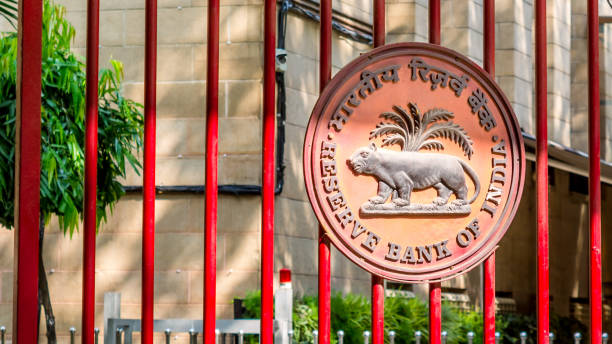
India’s central bank faces a delicate balancing act at its December policy meeting, as fresh analysis from Axis Mutual Fund suggests the Reserve Bank of India (RBI) may favour caution over aggressive moves on interest rates.
Despite a recent spell of strong headline growth, the report notes that much of the momentum has been driven by policy support rather than fundamental economic strength. Underlying drivers remain soft, making overall growth in 2026 likely to moderate to around 6.5%. In this context, the RBI is expected to maintain an accommodative stance to prevent any tightening in financial conditions that could weigh on next year’s GDP performance.
The rupee’s weakness in recent months, the report adds, is largely rooted in a widening trade deficit and the impact of the recent tariff agreement, rather than broader instability. While the current account deficit remains within manageable limits, the RBI has been actively balancing liquidity through open market operations and foreign exchange swaps.
Inflation, which has fallen sharply in recent readings, is also seen as temporary. Axis Mutual Fund expects one-year forward CPI to drift back towards roughly 4.25%, aligning closely with the RBI’s medium-term target. Meanwhile, banking system liquidity could tighten in the coming months due to continued FX interventions and a rise in currency in circulation. Even so, the central bank is likely to keep liquidity at around 1% of Net Demand and Time Liabilities (NDTL) to ensure orderly market conditions.
On interest rates, the report suggests that while some room for cuts exists, the scope is limited as much of the monetary transmission has already filtered through the economy. Bond markets are expected to remain stable, with yields likely to hover in the 6.40%–6.60% range. India’s inclusion in global bond indices could further support a flatter yield curve in the months ahead.