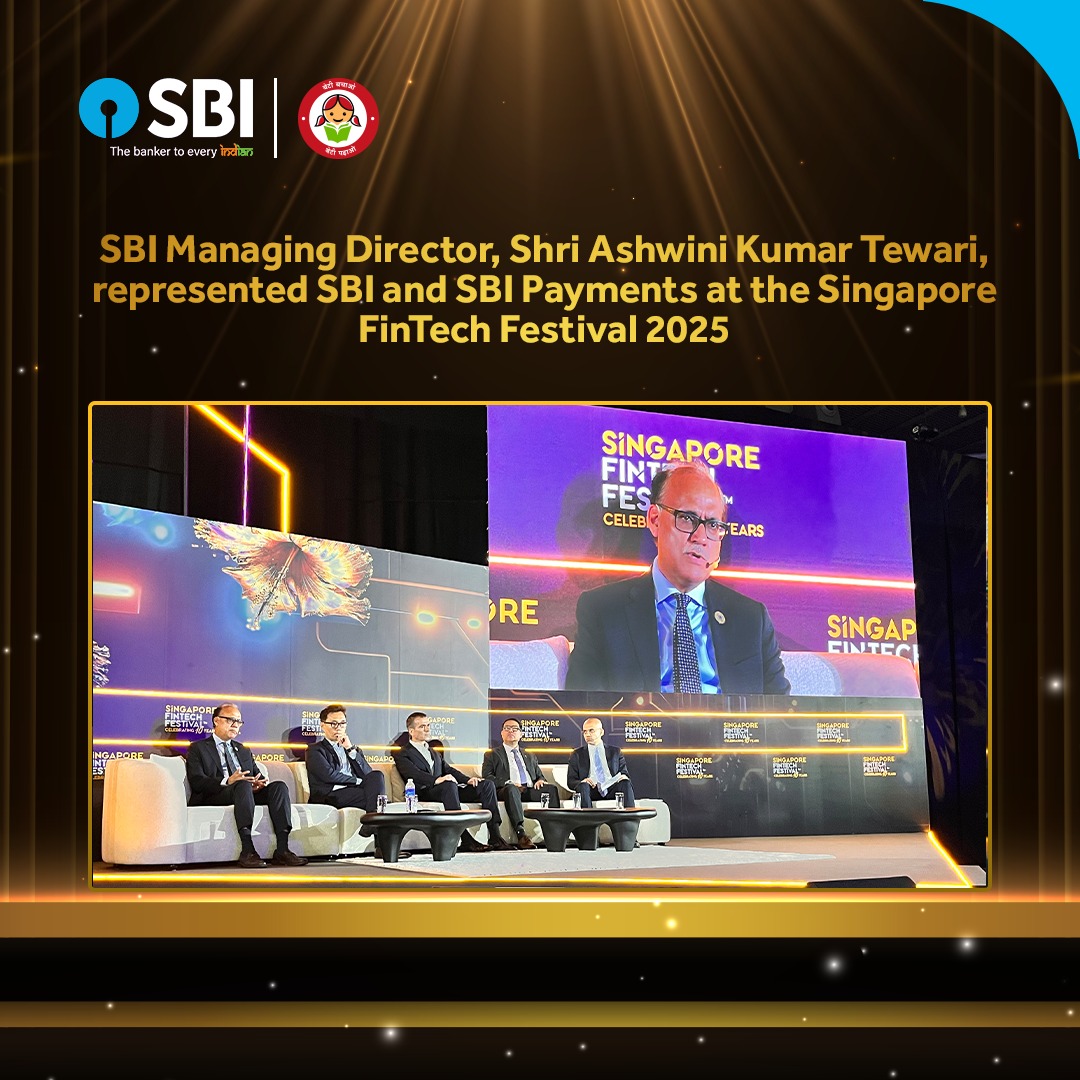
State Bank of India (SBI), the country’s largest lender, has set an ambitious two-year timeline to complete a full modernisation of its core banking infrastructure. The update, revealed at the Singapore FinTech Festival 2025, marks one of the biggest technology transitions undertaken by an Indian bank in recent years.
Addressing the event, Ashwini Kumar Tewari, SBI’s Managing Director for Corporate Banking and Subsidiaries, outlined a multi-layered strategy aimed at upgrading ageing systems while maintaining the continuity and reliability that underpin the bank’s operations. The plan centres on what SBI describes as “hollowisation”, microservices adoption, and a shift towards open and modular architecture.
Four-axis modernisation plan
Tewari said the bank has been working on a four-axis approach that includes upgrading hardware, migrating from Unix to Linux-based systems, hollowing out the core by externalising functions such as vendor and government payments, and embedding microservices to handle tasks like customer inquiries and accounting.
These steps, he said, are designed to help SBI re-architect its legacy structure into a more agile, scalable and future-ready platform capable of supporting the bank’s sizeable customer base and high-volume transactions.
Private cloud push
The country’s largest lender is also building a private cloud infrastructure to strengthen scalability while ensuring full compliance with regulatory and data security requirements. Tewari stressed that modernisation efforts are being carried out without interrupting day-to-day services.
“We are modernising as we run the ship. Our systems must always remain on and available to customers,” he said, adding that uninterrupted service continuity remains a non-negotiable priority.
Turning to partnerships
Tewari said SBI’s approach to the fintech sector has evolved from one of competition to collaboration. The bank has created a sandbox and innovation hub giving fintech firms access to nearly 300 APIs to test and integrate their solutions.
He noted that while agility, convenience, intuitiveness and security are important for onboarding fintech partners, the ability to operate at SBI’s scale remains equally critical.
Exploring agentic AI
In a significant technological shift, SBI is beginning to deploy agentic AI through a fintech collaborator to verify trade finance documents, including guarantees and letters of credit. The technology is expected to speed up processing for both customers and internal teams.
AI applications are also being examined for service ticket resolution and document analysis to further lift operational efficiency.
With ongoing investments in artificial intelligence, cloud infrastructure and open architecture, SBI says it is working to build a future-proof digital ecosystem that balances innovation with the reliability expected from India’s largest bank