Morphle Labs, a Bengaluru-based deep-tech healthcare automation company, has raised USD 5 million in a Series A round led by Inflexor Ventures, as it looks to scale its next-generation robotic and imaging systems designed to transform cancer diagnostics. The company said the funding will support global expansion, manufacturing scale-up, regulatory approvals and further investment in intellectual property and core technologies.
Founded in 2017, Morphle Labs focuses on bringing automation to histopathology, a field considered central to cancer diagnosis but one that continues to rely largely on manual processes. While areas such as radiology and haematology have embraced automation, anatomic pathology remains dependent on labour-intensive workflows, leading to delays and growing backlogs. More than 60% of histopathology laboratories worldwide report unfilled positions, the company said, creating a widening gap between diagnostic demand and available talent.
Morphle Labs is attempting to rebuild these systems using robotics, precision hardware, optics and computer vision. Its flagship robotic microtome, RoboTome®, is capable of slicing biopsy blocks at more than twice the speed of an experienced histotechnologist, while producing consistent, high-quality tissue sections required for downstream diagnostics. Its complementary platform, MorphoLens, can scan over 100 slides per hour, using high-throughput optics and AI-driven imaging to enable remote pathology and more scalable diagnostic operations.
Together, the systems aim to automate some of the most complex steps in histology, forming an end-to-end workflow that the company believes can significantly improve turnaround times, reliability and clinical readiness. Morphle has filed more than 80 patents across robotics, imaging and embedded systems, underlining what it describes as a strong R&D-led approach.
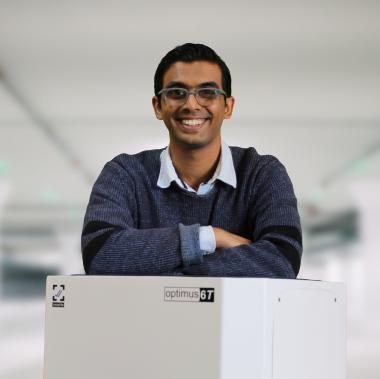
Rohit Hiwale, Founder and Chief Executive Officer, said the company’s ambition was to rethink healthcare automation from first principles. “Histology remains one of the few critical domains still untouched by true automation,” he said. “With RoboTome® and MorphoLens, we have tackled two of the most challenging bottlenecks in diagnostics, but this is only the beginning. The larger opportunity lies in connecting every broken link in the diagnostics chain and enabling labs to deliver faster, higher-quality results.”
Hiwale added that the new funding will also support team expansion. “We are on a mission to improve talent density across robotics and computer vision while solving extremely valuable problems for mankind,” he said.
The company is led by a technical founding team including Hiwale, an IIT Kharagpur graduate and second-time founder; CTO Ashish Manmode, also an IIT Kharagpur alumnus with expertise in systems integration and full-stack robotics; and COO Sunnel Daniel, who oversees business, regulatory and customer operations. Morphle’s 100-member team operates across Bengaluru and Boston, with growing commercial operations in the U.S. and Europe.
Inflexor Ventures partner Pratip Mazumdar said Morphle Labs was addressing one of the most overlooked but mission-critical areas of global healthcare. “Their ability to bring robotics, imaging and AI together into clinically reliable systems is exceptional,” he said. “The traction they are seeing with leading laboratories in the U.S. and Europe demonstrates the scale of the problem and the strength of their solution.”
The company intends to use the latest funding to accelerate manufacturing to meet international demand for RoboTome® and MorphoLens, expand its IP portfolio globally and advance regulatory certifications required for medical device commercialisation. It is also scaling hiring across robotics, optics, hardware, medical-grade software and compliance as part of its push into what it calls “physical AI”—the integration of intelligent software with high-fidelity hardware.
Beyond its current platforms, Morphle Labs is building integrated automation layers across tissue diagnostics, aiming to create a seamless, AI-enabled pipeline that can reduce diagnostic delays and improve outcomes for cancer patients worldwide.