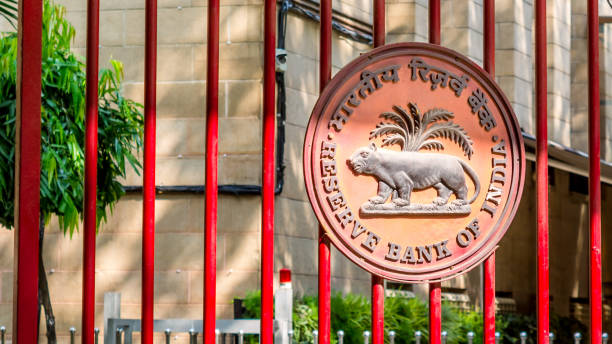
The Reserve Bank of India (RBI) is widely expected to keep interest rates unchanged at its upcoming Monetary Policy Committee (MPC) meeting, as policymakers weigh slowing growth against the risk of rising inflation.
The central bank cut the policy repo rate in December, placing greater emphasis on inflation falling below the lower bound of the Flexible Inflation Targeting (FIT) framework. However, with inflation now expected to edge higher, there appears little justification for further rate reductions in the near term.
Even under the revised CPI base-year series—scheduled for release from 12 February 2026—inflation is expected to hover around 4%. With the repo rate currently at 5.25%, this implies a real interest rate of around 125 basis points, which economists consider broadly appropriate. As a result, analysts expect the RBI to maintain a “neutral” stance, preserving policy space in case of an unexpected growth slowdown.
Growth momentum set to moderate
India’s economic growth surprised on the upside in the first half of FY26, expanding by 8.0%. However, recent indicators suggest momentum is gradually easing. Real GDP growth is estimated at 7.1% year-on-year in Q3FY26 and 6.3% in Q4FY26, broadly in line with the RBI’s projections.
For the full year, growth is expected at 7.3%, before moderating to around 6.7% in FY27. This aligns with the Economic Survey’s assessment of India’s potential growth rate at around 7%.
Unlike FY26, the upcoming year is unlikely to benefit from multiple growth tailwinds. Lower inflation, strong agricultural output, GST rationalisation and income tax cuts all supported demand last year. Many of these factors may fade in FY27, while the possible emergence of El Niño conditions in 2026 could pose risks to agricultural output.
Inflation pressures inch higher
Inflation, meanwhile, is expected to rise modestly. CPI inflation is estimated at 3.1% in Q4FY26, up from 0.8% in Q2, partly due to one-off GST-related price adjustments. For FY27, headline inflation is projected to average around 4%, supported by low base effects.
Core inflation is expected to remain above 5%, driven largely by volatility in gold and silver prices. However, core inflation excluding precious metals remains stable at around 2.3–2.5%, suggesting underlying price pressures are contained.
Bonds, liquidity and policy outlook
Bond markets have reacted cautiously to higher-than-expected government borrowing announced in the Union Budget. Benchmark yields have risen to around 6.77%, potentially weakening monetary transmission, especially as credit growth continues to outpace deposit growth.
With liquidity conditions tightening and banks’ demand for government securities moderating, the RBI may rely more on open market operations to stabilise yields and address structural liquidity constraints.
Overall, economists expect the February policy meeting to mark a continuation of the pause. With growth slowing but not faltering, and inflation close to target, the RBI is seen as having reached the end of its current rate-cutting cycle—unless economic conditions deteriorate sharply.