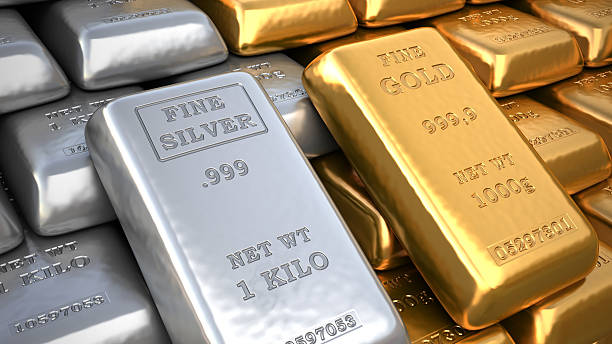
Gold and silver have both delivered strong returns over the past year, but their trajectories have diverged in notable ways. While gold maintained a steady upward climb, silver, after initially lagging, surged sharply towards the end of 2025, outperforming its more traditionally stable counterpart. The rally has prompted investors to reassess their exposure to precious metals and better understand the distinct roles each plays.
Despite being grouped under the same asset class, gold and silver differ significantly in structure and behaviour. Gold’s demand is relatively balanced, driven by central banks, institutional investors, and jewellery consumption. This broad base contributes to deeper liquidity and comparatively lower volatility, reinforcing its reputation as a safe-haven asset during periods of economic uncertainty.
Silver, by contrast, has a stronger industrial linkage. Its use in sectors such as electronics, solar energy, and manufacturing makes it more sensitive to global economic cycles. As a result, silver prices tend to be more volatile, often reacting sharply to shifts in industrial demand and broader commodity trends.
These differences are reflected in how the two metals perform within investment portfolios. Gold has consistently acted as a stabiliser, offering diversification and protection during times of market stress. Its defensive qualities make it a cornerstone for long-term asset allocation strategies.
Silver, meanwhile, behaves more like a high-beta asset. It tends to amplify market movements, rising faster in bullish phases but also falling more steeply during downturns. For investors, this makes silver less of a substitute for gold and more of a complementary asset, suited to those willing to take on higher risk in pursuit of potentially greater returns.
As market conditions evolve, the contrasting characteristics of gold and silver continue to shape investor strategies, underlining the importance of understanding not just their similarities, but their fundamental differences.