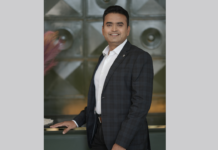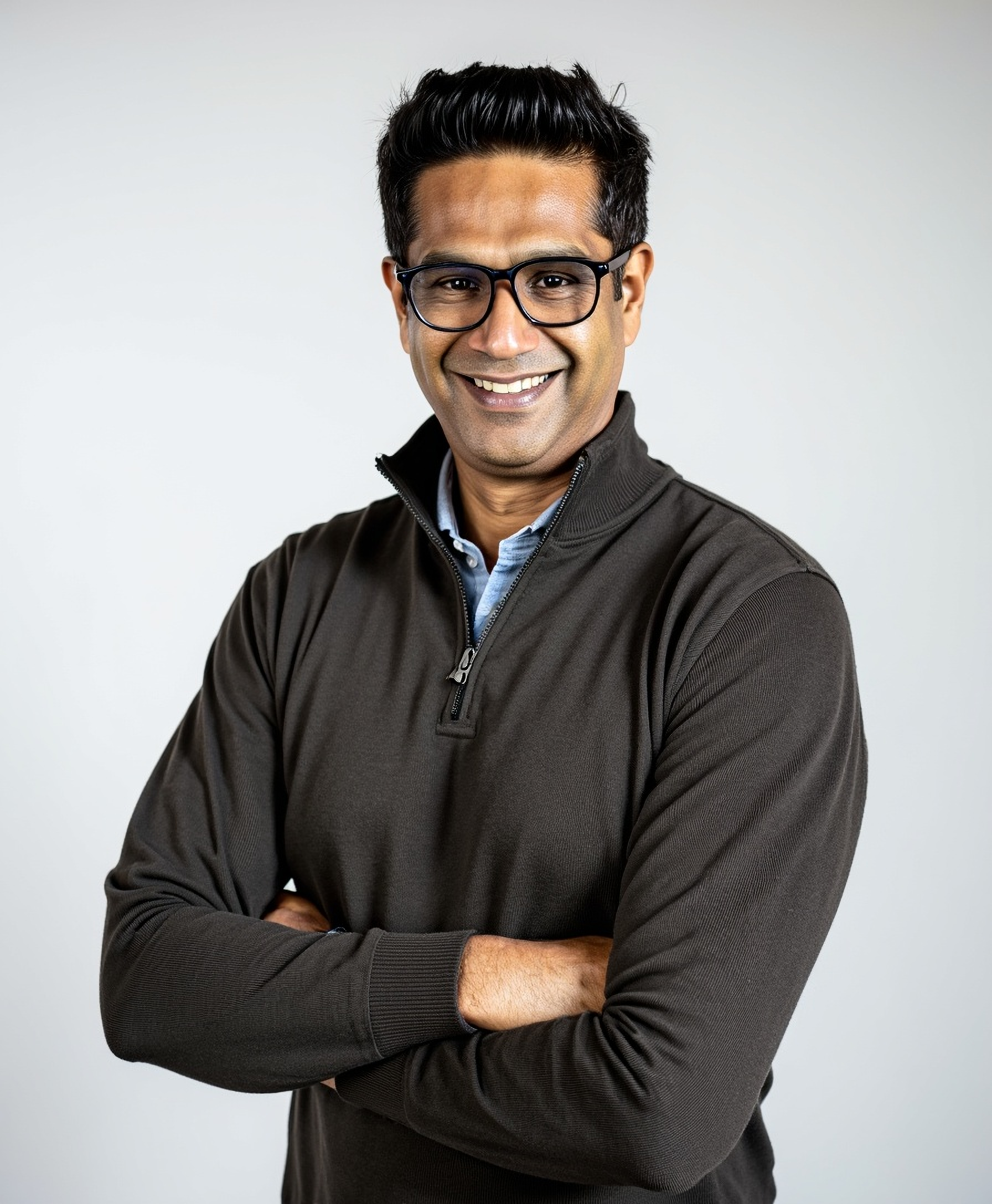
As India accelerates toward a digitally integrated, infrastructure-first growth cycle, Secutech Automation is positioning itself at the intersection of AI, IoT, and enterprise security. In an exclusive conversation with Wealth Spark, CEO Aditya Prabhu and COO Deepali Kelkar outline how the company has evolved from a 150 sq. ft. startup in 2001 into a leading systems integrator with over 200 deployments across critical sectors.
At a time when smart infrastructure is moving from concept to necessity, the duo emphasises a clear shift away from fragmented, siloed security systems toward unified, interoperable platforms. Their proprietary O3i framework—integrating owners, operators, and occupants—reflects a broader industry transition toward data-driven, lifecycle-led infrastructure.
Q) What sparked the idea for Secutech back in 2001, starting from a 150 sq. ft. office, and how did your complementary skills as co-founders shape that early pivot from home security to enterprise integrations?
Aditya Prabhu: Secutech began in 2001 from a small 150 sq. ft. office in Mumbai, at a time when security in India was largely fragmented and reactive. Most solutions operated in silos (CCTV, fire systems, access control), each functioning independently with little intelligence or integration. We saw an opportunity to rethink this approach and build systems that could work together in a more unified and efficient manner.
The early years involved some experimentation, including work in home security; however, it quickly became clear that the real gap existed in enterprise and infrastructure environments, where scale and complexity demanded a more integrated approach. That realisation led to our shift toward enterprise integrations and laid the foundation for what Secutech would eventually become.
Deepali Kelkar: From the beginning, the focus was not just on identifying the opportunity, but on building the capability to execute at scale. We established robust processes early on and ensured that our systems and teams could support increasingly complex projects as we grew. While the strategic direction was clear, it was equally important to build a structured, reliable execution model. This balance allowed us to move quickly without compromising on delivery.
From the outset, the vision was to move beyond standalone systems and build an intelligent, connected infrastructure that could support evolving business and urban needs.
Q) The 2005 international airport project was a game-changer. How did unifying security, surveillance, and automation over IP validate your vision for the O3i framework?
Aditya Prabhu: The 2005 international airport project was a defining moment for us. At a time when most systems operated independently, we brought together surveillance, security, and automation on a single IP-based platform. This was one of the earliest large-scale validations that integrated infrastructure was not only possible but far more effective in managing complex environments.
What this project demonstrated was that when systems are connected, they move from being reactive tools to enabling real-time visibility and coordinated decision-making. It shifted the conversation from deploying individual technologies to designing unified ecosystems.
This experience directly shaped our thinking and eventually led to the conceptualisation of the O3i framework. We realised that true efficiency comes from aligning the needs of owners, operators, and occupants within a single integrated system. That principle continues to guide how we design and deliver infrastructure today.
Q) O3i (Owners, Operators, Occupants Integration) is core to Secutech’s edge. Can you walk us through how it solves real-world pain points in legacy vs. modern infrastructure, especially with tools like INVICTUS or Digi Pravesh?
Aditya Prabhu: One of the biggest challenges in infrastructure, both legacy and modern, is fragmentation. Systems operate in silos, and more importantly, the needs of different stakeholders are rarely aligned. O3i was built to address exactly this gap by bringing Owners, Operators, and Occupants onto a common, integrated platform.
For owners, the focus is on visibility, understanding asset performance, costs, and long-term returns. Operators need systems that are reliable and easy to manage, with real-time insights and minimal downtime. Occupants expect safety, convenience, and a seamless experience. O3i ensures that all three perspectives are built into how systems are designed and deployed.
This becomes especially relevant when working with legacy infrastructure, where clients do not want to replace existing systems but need them to work together more intelligently. Our approach allows integration with what already exists, creating a single source of truth without disruption.
Solutions like Digi Pravesh are a good example of this in action. By enabling digital identity, real-time verification, and traceable access, it simplifies operations while improving transparency and security. O3i is not a standalone platform. It is the foundation that ensures every solution we build is aligned to real-world usage and outcomes.
Q) With AI and IoT booming, how do products like FaceTag or LOGMeIN help clients avoid vendor lock-in while scaling for mission-critical sectors like defence or ports?
Aditya Prabhu: At Secutech, we have consistently focused on building open, interoperable systems rather than proprietary ecosystems. One of the biggest challenges clients face today is vendor lock-in, where systems cannot communicate with each other, making upgrades, scaling, and integration both expensive and restrictive.
Our approach is to design solutions that remain flexible over time. Products like FaceTag and LOGMeIN are built to integrate seamlessly across platforms, ensuring that clients are not tied to a single vendor or technology stack. This becomes especially critical in mission-critical environments such as defence, ports, and large infrastructure projects, where systems need to evolve continuously without disrupting operations.
AI, ML, and IoT are enablers in this process, but the real value lies in how they are applied. By allowing different systems to work together, we help reduce fragmentation, improve visibility, and enable more informed decision-making.
As a Master Systems Integrator, our role goes beyond deploying technology. We ensure that every layer works cohesively, creating solutions that are scalable, adaptable, and aligned with long-term operational needs.
Q) Secutech hit 200+ deployments by 2022 – Deepali, what operational “checklists and discipline” have kept execution excellent amid rapid scaling from project-based to lifecycle-led delivery?
Deepali Kelkar: As we scaled to 200+ deployments, one of the biggest priorities was ensuring that execution quality did not get diluted. For us, that came down to building strong operational discipline early on.
We standardised processes across projects through detailed checklists, clearly defined workflows, and consistent review mechanisms. This helped bring predictability to execution, even as project complexity increased. At the same time, we placed a strong emphasis on EHS compliance and regular training to ensure teams were aligned not just on delivery, but also on safety and accountability.
Another important shift was moving from a project-based approach to a lifecycle-led model. This meant thinking beyond deployment to long-term performance, maintenance, and system optimisation. Consistency has been a key differentiator for us. No matter the scale or sector, the focus has always been on delivering reliably, with the same level of rigour across every project.
Q) The 2025 Digi Pravesh at Maharashtra’s Mantralaya stands out, what challenges that arose in deploying facial recognition and RFID for government security, and what’s next for public infrastructure?
Deepali Kelkar: Deploying Digi Pravesh at a high-security environment like the Maharashtra Mantralaya came with its own set of challenges. The first was ensuring that the system met stringent security and compliance requirements while still being simple enough for large-scale, everyday use. Government environments involve multiple stakeholders, approvals, and legacy processes, so adoption and transition needed to be handled carefully.
Our approach was to integrate the system seamlessly into existing workflows rather than disrupt them. By combining Aadhaar-based verification, QR authentication, and role-based access controls, we were able to create a system that strengthened security while remaining intuitive for users. A strong focus was also placed on real-time visibility through monitoring dashboards and analytics, ensuring both control and transparency for administrators.
Another key aspect was user adoption. Moving from manual to digital processes requires trust, so the system was designed to be easy to use while offering clear benefits such as reduced wait times and better visitor management.
Going forward, we see this as part of a larger shift toward building a scalable digital identity and access management ecosystem across public infrastructure. The objective is to create systems that are secure, interoperable, and capable of adapting to the growing complexity of government operations.
Q) Aditya, you emphasise “continuous reinvention”- how has fostering that culture helped Secutech win awards like World’s Smartest Building while staying ahead of market trends?
Aditya Prabhu: For us, continuous reinvention is not a one-time shift; it is built into how we operate. The environments we work in are constantly evolving, whether it is new technologies, changing security requirements, or more complex infrastructure needs. Staying relevant means we cannot rely on what worked even a few years ago.
We actively encourage teams to question existing approaches and look at how systems can be made more integrated, intelligent, and outcome-driven. This mindset has helped us move from standalone solutions to unified platforms that bring together IoT, AI, and automation in a meaningful way.
The recognitions we have received are a result of this approach. It reflects not just innovation in design, but the ability to deliver systems that are scalable, interoperable, and aligned with real-world use.
Ultimately, reinvention for us is about staying ahead of what the market will need next, rather than responding to it after the fact.
Q) Across clients like JNPT, ICICI, and Titan HQ, what’s the biggest misconception about smart buildings in Tier 2/3 India, and how does Secutech address it?
Aditya Prabhu: One of the biggest misconceptions is that smart building infrastructure is expensive and only relevant for large metro cities. In reality, we are seeing strong demand from Tier 2 and Tier 3 markets, especially as infrastructure development expands and organisations look for more efficient, future-ready systems.
What is often misunderstood is that smart infrastructure does not have to be deployed all at once. It can be built in layers. For many of our clients, the starting point is solving a specific problem, whether it is access control, surveillance, or energy management, and then scaling it over time into a more integrated system.
Our approach has been to design modular and interoperable solutions that can work within existing infrastructure and budgets. This allows clients to adopt technology in a phased manner without needing large upfront investments.
Across sectors such as ports, banking, and corporate campuses, we have seen that once the initial systems are in place, the value becomes clear very quickly, both in terms of operational efficiency and long-term cost savings.
Q) Looking to 2027, how will Secutech evolve O3i for India’s urban boom, especially in PropTech co-investments or sustainable cities?
Aditya Prabhu: As we look toward 2027, the focus for us is on evolving O3i into a more connected, data-driven ecosystem that goes beyond individual buildings and starts linking larger urban infrastructure.
The way we see it, the next phase of growth will come from how well different systems talk to each other, across facilities, campuses, and city-level infrastructure. O3i will continue to play a role in bringing together owners, operators, and occupants, but with a stronger layer of real-time data, analytics, and automation built into it.
We are also seeing opportunities to collaborate more closely within the PropTech ecosystem, whether through partnerships or co-investments, especially in areas like energy management, space optimisation, and user experience. Sustainability will be a key driver here, with a growing need for systems that can measure, monitor, and improve resource efficiency over time.
For us, the goal is to build platforms that are not just future-ready but also adaptable. As cities expand and infrastructure becomes more complex, the ability to integrate, scale, and evolve will define how effective these systems really are.
Q) For aspiring PropTech founders, what’s one lesson from your 20+ years – from Dramio/Third Wave ventures to Secutech’s resilience?
Aditya Prabhu: One of the biggest lessons over the past two decades has been that solving real problems matters far more than chasing trends. Technology will continue to evolve, but unless you are addressing a genuine need on the ground, it is difficult to build something that sustains over time. Adaptability is equally important. The PropTech space is changing rapidly, and founders need to be open to rethinking their approach as technologies and user expectations evolve.
Deepali Kelkar: From an execution standpoint, consistency is what sustains a business. Strong processes, disciplined delivery, and the ability to scale without compromising quality are critical. We have seen that across every phase of our journey. Building with a long-term view and ensuring that execution keeps pace with ambition is what ultimately creates resilience.