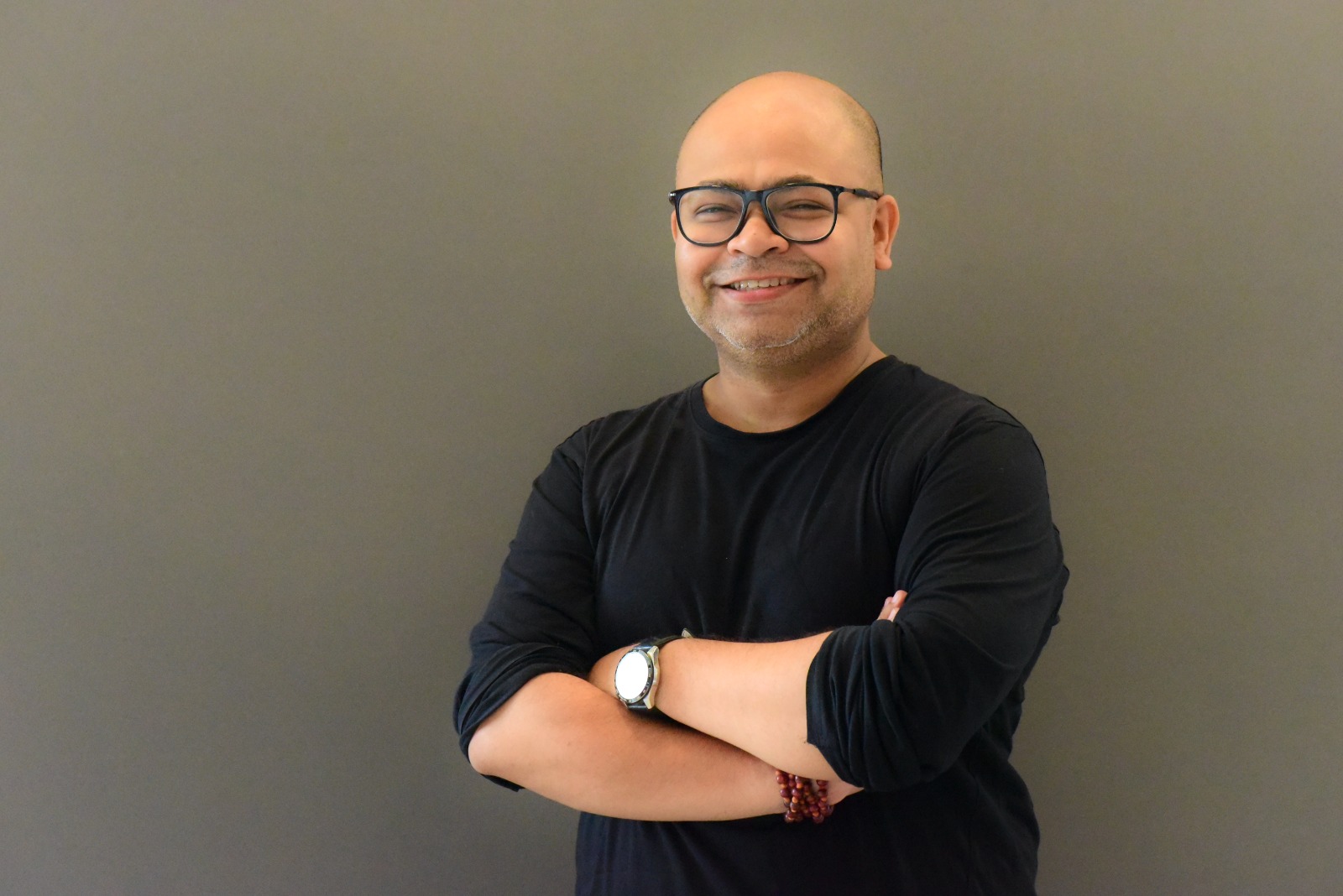
In a country where 62% of citizens are confused by health information, even when it comes from their own doctors one former corporate media executive decided enough was enough.
Sudipta Sengupta walked away from a decorated 15-year career spanning startups, Times Internet, and BW Businessworld to build something India had never seen: a physician-reviewed, internationally certified health fact-checking platform.
Today, THIP stands at the intersection of media, medicine, and public trust and Sengupta is just getting started. With an engineering degree, an MBA, and 15 years of corporate media experience spanning Times Internet and BW Businessworld, Sengupta left the security of a senior editorial career to confront one of India’s most stubborn public health crises: the unchecked spread of health misinformation.
THIP became the first Indian website certified by the American Accreditation Commission International (AACI), joined the International Fact-Checking Network (IFCN) in 2020, and is now part of the WHO’s Vaccine Safety Net. We sat down with Sengupta to understand the journey, the business, and the hard lessons no MBA prepares you for.
Q: You come from a strong corporate media background. What made you pivot to building your own venture?
I have to go back to my childhood. Born in Haldia — a small port township near Kolkata — my father worked for Indian Oil Corporation. Like most Bengali households, education was everything. Business was almost a forbidden subject. So I followed the expected path: St. Xavier’s, then engineering, then came down to Delhi for post-graduation. But I always wanted to build something of my own. I just never knew what.
My first job, by coincidence, was at a startup. I wore multiple hats every month — strategy, sales, product. I loved every single day of it. Then I moved to Times Internet, and destiny played its hand again — I was placed in their startup incubator division. A two-person team building community products from scratch inside a large organisation. Then came BW Businessworld, a 25-year-old legacy platform with no meaningful digital presence. The CEO said, “Come and see.” I saw the potential to build 25 distinct digital brands — managed by just five people. That problem unlocked something in me. By the time I left BW, five years later, I was a completely different person. I knew there was nothing I could not figure out.
“By the time I left BW, I was a completely transformed person. I realised there was nothing I could not do — maybe I don’t know everything, but I will figure it out.”— Sudipta Sengupta, Founder & CEO, THIP
Q: How do you explain what THIP does to someone who has never heard of it?
We keep changing the definition every month, honestly — because the problem evolves. But the simplest way to put it: we are a trust information layer between the medical fraternity and the general public.
India has very low health literacy. Most people cannot even distinguish between an MBBS and a Bachelor of Ayurvedic Medicine and Surgery — these are qualifications of doctors. If you don’t know how to identify your own doctor’s credentials, how will you know whether a piece of health information is right or wrong?
Our own research found that 62% of people feel confused when they see health information — even when their own doctor gives it. That confusion leads to a very dangerous chain: self-medication, delayed treatment, and above all, a growing distrust of the medical profession.
We try to break that chain. We don’t take sides between modern medicine, Ayurveda, or homoeopathy. Our only request is: listen to an expert in whatever medicinal system you follow. We help bring that expert closer to you.
Q: THIP became the first Indian health platform to receive AACI certification and to join the IFCN. How did that happen?
We pursued those certifications — they didn’t come to us. When we studied how Western platforms like WebMD, Mayo Clinic, and Healthline operate, we noticed they subject themselves to extraordinary levels of scrutiny. Every piece of content is reviewed by doctors before publication. That standard simply doesn’t exist in mainstream Indian media. Health is often treated as a Lifestyle topic — easy clicks, five-ways-to-lose-fat articles written by non-experts.
We reached out to international certification bodies and found that most had no India programme. The ones that did had frameworks built for Western systems, where doctors routinely give ten hours a week to content work. That doesn’t happen in India — our doctors are severely overworked. So we spent a year and a half building our own India-adapted process: science-background writers, medical reviewers, structured editorial standards. We applied, got rejected, made corrections, applied again. Eventually, we earned it. And we have to renew it every year.
The WHO’s Vaccine Safety Net membership came later, driven by a specific need. With the HPV vaccine being introduced, we started seeing an organised anti-vaccine lobby emerge in India — something that didn’t exist before, even during Covid. WHO recognised that India needed credible voices in that space and invited us to join their global community.
Q: THIP allocates 5% of revenue to healthcare for marginalised communities. How do you balance social mission with financial sustainability?
From day one, I created two bank accounts. Whatever we earned, 5% went straight into the second account. If you don’t see it every day, you don’t miss it. It becomes discipline, not sacrifice. So when revenues were tight, the equation was simply tight on account one — the mission account was never the variable we adjusted.
As for how we’ve survived: we are bootstrapped, and this is a slow-moving business. You don’t get investors fighting to fund trust-building in media — that’s not a high-growth narrative. But we were lucky. During Covid, awareness of credible health information exploded.
Social media use grew, and governments globally started holding platforms accountable for misinformation. Meta’s third-party fact-checking programme emerged, and for several years we were the only health-focused organisation doing that work in India. Partnerships with Facebook and Google kept us financially alive in our early years.
Q: Where do you see THIP in five years?
The vision is simple but ambitious: whenever any Indian — urban or rural, educated or not — has a question about their health, THIP should come to mind as a source. Not the only source, but a trusted one.
We’re building a funnel across our three verticals. THIP Media is free information — today a website, tomorrow potentially a chatbot or any format. THIP Academy is micro-subscriptions to courses that help people understand their own bodies. THIP Care converts that knowledge into action — guiding people toward the right health services.
Someone worried about weight gain reads our content, takes a course on metabolic health, then books a full-body checkup through us. That’s the journey we’re architecting. Wherever someone is in their health decision-making, we want to be there.
Q. What would you tell someone about to make the jump from corporate career to founder? What do you wish you’d known?
Keep your mind completely open about yourself. I came in convinced I knew my strengths and weaknesses — 15 years of corporate experience, great team management, strategic thinking. Six years in, virtually every assumption has been upended. My supposed strengths are now liabilities; some weaknesses have become core assets.
The biggest shock? Being a beloved team leader and being an effective CEO are fundamentally different skills. You cannot be the person making hard calls the morning after a team dinner. Structure and some distance are necessary — even if the culture is warm. And be ruthless about the balance sheet. Nothing else ultimately measures you. Not culture awards, not press coverage, not how much your team loves you. Cash flow and the balance sheet. Everything else is in service of those two things.