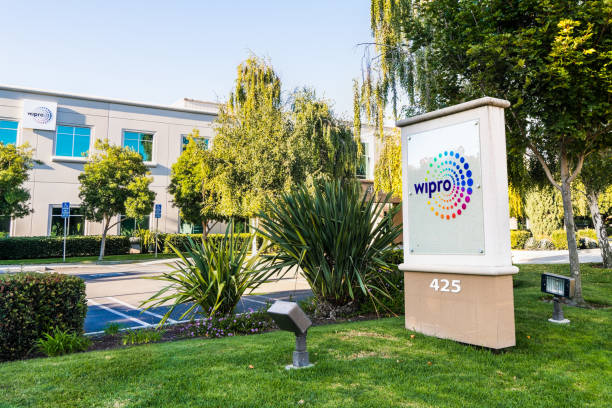
Wipro Limited has announced an expansion of its operations in Seoul, underlining the country’s growing importance as a strategic market for the technology firm.
The move includes a larger office footprint in the capital and the launch of a new Innovation Lab, part of the company’s global Wipro Innovation Network. The facility is intended to strengthen Wipro’s ability to work closely with South Korean clients while linking them more directly to its global delivery and innovation systems.
South Korea is widely regarded as a major hub for advanced industries, including semiconductors, automotive engineering and industrial manufacturing. Wipro said its expanded presence reflects rising demand among Korean businesses for artificial intelligence-led transformation that can be deployed at scale across international markets.
The company currently employs several hundred staff in South Korea and said it plans to continue investing in local talent. Its operating model combines on-the-ground teams with its global delivery network, allowing clients to access specialised expertise while maintaining local engagement. Wipro is also collaborating with academic institutions to support skills development and provide early-career professionals with exposure to advanced technologies.
The new lab in Seoul will serve as a collaborative space for co-innovation, enabling clients and partners to test ideas, develop solutions and accelerate deployment. It will also showcase the firm’s AI-led platforms, branded as Wipro Intelligence, designed to demonstrate real-world business applications of emerging technologies.
According to the company, the lab will focus on sectors such as technology, automotive and manufacturing. Key areas of work include software-defined vehicles, intelligent product engineering, smart factories and supply chain optimisation.
The expansion follows Wipro’s recent acquisition of the Digital Transformation Solutions unit from HARMAN International, part of Samsung Electronics. The deal added more than 5,000 employees globally and is expected to strengthen the firm’s engineering and digital transformation capabilities, with South Korea playing a central role.