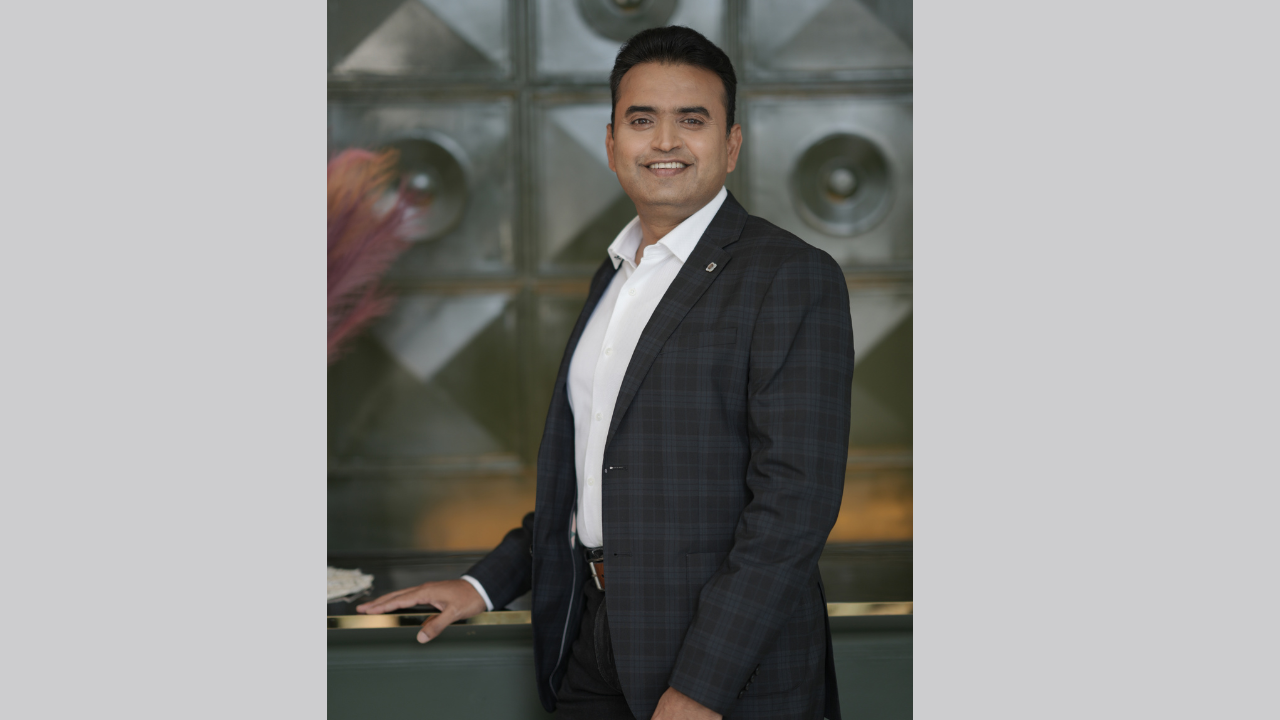
What does it take to build a five-hundred crore business from twenty-eight thousand rupees and a secondhand scooter? In 2010, Vijai Subramaniam opened a two-hundred square foot furniture shop in Bengaluru.
The Indian furniture market was ninety-five percent unorganised. Customers were used to local carpenters, custom builds, and bargain prices. Nobody was asking for international design. Nobody thought they needed it. He thought differently.
Today, Royaloak Furniture is one of India’s most recognised organised furniture retail brands, two hundred stores, 100 cities, over two thousand jobs, and a franchise network that is rewriting how middle India furnishes its homes. But what makes this story remarkable is not just the scale. It is how he got there. No overnight pivot. No flashy funding round. Just one unpopular decision at a time, made with what he calls quiet decisiveness.
In this exclusive Wealth Spark conversation, Mr. Vijai Subramaniam, Chairman and Founder of Royaloak Furniture, opens up on building a brand in a broken market, the franchise partnerships that scaled him fast, the import crisis that tested everything he had built, and what the next five-ex looks like for a company that is no longer just selling furniture.
Q. You started with just ₹28,000 after selling your scooter. What was the single most critical decision in the first 3–5 years that turned a small exhibition stall into a scalable furniture brand?
Vijai Subramaniam: The single most critical decision in the early years was choosing to build an organised, design-led furniture retail model at a time when nearly 95 percent of the market was unorganised.
Royaloak started from very humble beginnings. In 2010, I opened a small 200 square foot shop in Bengaluru with just ₹28,000. I sold my scooter, pooled funds with two friends, and took the leap with a clear belief that Indian consumers were ready for better-designed, globally inspired furniture that was still affordable. At that time, the market was dominated by local carpenters offering custom furniture at very low prices. Instead of competing on price alone, we focused on introducing customers to the value of organised retail, ready furniture, and international design sensibilities from markets like China, Malaysia, and Vietnam.
The real breakthrough came from staying focused on three things: customer education, affordability, and building trust through in-store experience. As demand grew, the next important decision was adopting a franchise-led expansion model. This allowed us to scale faster across cities while benefiting from local market understanding, without compromising on our product and sourcing strengths.
Q. Royaloak successfully blends international design with Indian tastes and price sensitivity. What’s the hardest part of product curation that most competitors fail to understand?
Vijai Subramaniam: The hardest part of product curation is getting the balance right between aspiration, functionality, and affordability for the Indian customer. That is where most players tend to get it wrong. Many assume curation is about following global trends or replicating international catalogues. In reality, it is far more grounded. What works in Europe or Southeast Asia does not automatically translate into Indian homes, where space constraints, usage patterns, and budget considerations are very different.
For us, curation comes directly from store-level interactions, customer feedback, and what we observe on the ground during regular visits. Customers may like a design, but they will still ask practical questions around durability, storage, and whether it fits their space and lifestyle.
That feedback feeds into how we work with our global manufacturing partners. It is a continuous process of refining materials, proportions, and finishes so that the product retains its international appeal but is still practical for Indian usage.
At the end of the day, Indian consumers are very clear in what they want. They are looking for variety, reliability, and value. They want something that looks good, lasts well, and fits into their everyday lives. Understanding that nuance and building for it, consistently, is what makes product curation work.
Q. You’ve built a 200+ store network largely through franchisees. What red flags do you now look for immediately when evaluating potential franchise partners?
Vijai Subramaniam: Choosing the wrong partner can slow you down far more than not expanding at all. The biggest ‘no’ for us, is when someone only holds a purely short-term mindset.
Furniture retail is not a quick-return business. It needs patience, consistency, and a willingness to build the market locally. If someone is only focused on immediate profitability, it usually does not sustain.
The second is a lack of seriousness toward customer experience. At the end of the day, the store is the brand for the customer. If the partner does not see value in service, product understanding, and team training, it shows very quickly on the floor.
We also pay close attention to how comfortable they are with systems and processes. As we have scaled, standardization has become critical. Partners who want to operate completely independently, without aligning to structured processes, typically struggle in the long run.
Beyond that, we look at basic business fundamentals (financial discipline, credibility in the local market, and the ability to build and retain a team). Retail is people-driven, and without a stable team, consistency becomes difficult.
Q. You’ve guided the company through import restrictions and market downturns with “quiet decisiveness.” Can you share one tough call you made that was unpopular at the time but proved decisive later?
Vijai Subramaniam: There was a phase when changes in customs duties and import regulations created a lot of uncertainty for the entire industry. For us, such phases were a genuine test. We had to decide whether to pause imports or shift aggressively to local sourcing, which at that time seemed like the safer and more immediate option.
Internally, there was pressure to take that route. It would have helped in the short term, especially from a cash flow and operational standpoint. But I was not convinced it aligned with what we were building. Our strength has always been in offering globally sourced designs with consistent quality, and I felt a sudden shift could dilute that.
So we chose to hold our position. We slowed things down, absorbed the pressure, and waited for more clarity instead of reacting immediately. It was not an easy call. It impacted business in the short term, and it was not a popular decision at that point.
But once the situation stabilised, we were able to re-enter with better cost structures and without compromising on product quality. That gave us a stronger position in the market and allowed us to offer better value to customers.
I believe that if you keep changing direction every time the environment becomes uncertain, you lose the core of what you are building. Sometimes, the tougher decision is to stay the course.
Q. Your leadership style emphasizes empowering others rather than being the visible face of the brand. How have you consciously designed Royaloak’s culture to survive and thrive even without your daily involvement?
Vijai Subramaniam: I have always believed that if a company depends too much on the founder, it eventually becomes a bottleneck. So quite early on, I was clear that Royaloak had to be built as an institution, not around an individual.
A big part of that has been building a strong second line of leadership. I rely on what I call my “generals” or people who own their functions end-to-end, understand the larger direction of the business, and are comfortable taking decisions without waiting for approvals at every step.
We have also been very deliberate about clarity in roles and decision-making. People know what they are responsible for, where they can act independently, and when something needs escalation. That removes a lot of dependency and hesitation within the system.
At the same time, I stay closely connected to the business, just not in a way that slows it down. Regular reviews, store visits, and direct interaction with customers and franchise partners keep me grounded in what is actually happening on the floor.
Over time, what really makes this work is trust. When people feel trusted, they take ownership in a very different way. They start thinking beyond their role and contribute to building the organisation itself.
Q. Many entrepreneurs struggle with delegation as they scale. What was the most difficult aspect of transitioning from a hands-on founder to a more strategic leader?
Vijai Subramaniam: The hardest part, honestly, is learning to step back without feeling like you are losing control of the business.
In the early years, you are involved in everything; from sales, sourcing, store operations, to even small day-to-day decisions. That level of involvement becomes a habit. So the shift is not just operational, it is mental.
For me, the real transition was accepting that scale requires trust. You cannot build a large organisation if every decision still depends on you. At some point, you have to allow others to take ownership, even if they approach things slightly differently than you would.
That is where building a strong second line helped. Over time, I have been able to rely on leaders who understand both the business and my expectations, which makes it easier to step away from day-to-day execution and focus on the larger direction.
That said, I have not disconnected from the business. The difference is that I am no longer involved in every operational detail. Finding that balance between staying connected and not becoming a bottleneck, has probably been the most important shift in moving from a hands-on founder to a more strategic role.
Q. With revenues crossing ₹500 crore, what does the next 5x growth look like for Royaloak? Are you thinking omnichannel dominance, manufacturing integration, or something entirely different?
Vijai Subramaniam: For us, the next phase of growth is not simply about adding more stores. We want to evolve from being a furniture retailer into a more complete home and lifestyle brand.
Physical retail will continue to be important, but the way customers discover and buy is clearly changing. So a big part of the focus is on building a stronger omnichannel presence, where the experience is seamless whether someone walks into a store, browses online, or does a mix of both.
At the same time, there is a clear opportunity to go deeper into ‘home’ development. Furniture is just one part of the journey. We are already seeing strong demand for modular kitchens, wardrobes, and more integrated interior solutions. Expanding into these areas allows us to become a more complete partner for the customer rather than just a product-led brand.
Another important lever is market expansion. A lot of our future growth will come from Tier 2 and Tier 3 cities, where demand is growing quickly but organised options are still limited. Our franchise-led model continues to play a big role here, because it gives us both scale and strong local understanding.
Alongside this, we are also building out our B2B side, working with developers, institutions, and large projects. That brings a different kind of scale and consistency to the business.
So if I had to sum it up, the next 5x is not one single bet. It is a combination of stronger omnichannel play, going deeper into the home, and expanding our reach across both retail and institutional segments, all supported by a more structured operating model as we scale.
Q. The furniture industry is seeing massive disruption from new materials, e-commerce, and changing consumer behaviour. Where do you see the biggest opportunity (or threat) that traditional players are missing?
Vijai Subramaniam: The biggest shift, in my view, is about how the Indian consumer has fundamentally changed. Homes today are smaller, more dynamic, and far more design-conscious. The younger customer is not looking for heavy, permanent furniture that stays in one house for decades. They want flexibility. They want furniture that is space-efficient, multifunctional, and adaptable to how their lives move across cities, jobs, and life stages.
We started noticing this change early on. That is why we have focused a lot on modular formats, space-saving designs, and products that solve for real constraints in urban homes. Today, the opportunity is about understanding how India lives today and building solutions around that.
The second big shift is how customers engage with brands. A customer may discover a product online, visit a store to experience it, compare options digitally, and expect fast, reliable delivery. For them, it is one seamless journey. The real threat is not e-commerce alone, it is the inability to respond to a customer who now values speed, flexibility, and ease just as much as design and price.
For me, the opportunity lies in combining strong product understanding with an agile, omnichannel approach. Those who can do both well will define the next phase of this industry.
Q. You’ve mentioned that success is about lifting people as you climb. Beyond business, what’s one social or community initiative you’re most proud of building through (or outside) Royaloak?
Vijai Subramaniam: Within Royaloak, what I value most is the ecosystem we have been able to create. Today, there are over 2000 people directly employed with us, along with a much larger network of partners, vendors, and franchisees. Being able to create stable livelihoods and see families grow with the company over the years is something I take very seriously.
Outside of the business, I have also been involved in supporting a few community and charitable initiatives personally. I do not usually speak about those in detail because I believe that kind of work is more meaningful when it is done quietly.
If I had to sum it up, what gives me the most satisfaction is being able to use whatever we have built as a platform to support people, both within the organisation and beyond it.
Q. You practice meditation and play golf to maintain balance. For a founder who built an empire from ₹28,000, how do you define personal success today — and has that definition changed from what it was 20 years ago?
Vijai Subramaniam: Meditation and golf, for me, are just ways to stay balanced and clear-headed. They help me slow down, reflect, and come back with better focus.
Even when I started out with very little, I was always clear about one thing; focus on the basics and stay consistent. That belief has stayed with me over the years.
Earlier, success may have been more about building something and proving that it can work. Today, it is more about sustaining it, growing it responsibly, and ensuring that it continues to create value for a lot more people.
But at its core, the idea is still the same: keep things simple, stay consistent, and do the work every single day.
Q. If someone is a first-generation entrepreneur and is planning to start his/her business, what advice would you give?
Vijai Subramaniam: If I had to keep it simple, I would say focus on three things and stay consistent with them. First, get the product right. Everything starts there. You can spend on marketing, branding, and expansion, but if the product does not deliver real value, it will not sustain. Customers may try you once, but they will not come back.
Second, build trust over time. A brand is not created overnight. It is built through consistency in what you promise and what you deliver. In a crowded market, that trust becomes your biggest strength.
Third, be very disciplined about cash flow. In the early years, survival depends on how well you manage money. Avoid unnecessary risks, keep your costs under control, and do not chase growth at the cost of stability.
I started with very limited resources, so a lot of my learning came from being careful, staying patient, and focusing on long-term value instead of quick gains. Even during difficult phases, that approach helped us stay steady.