When Christel House India opened its doors in Bengaluru in 2001, it began with 320 children from under-resourced communities, many of whom were the first in their families to attend school. Twenty-five years later, the organisation is measuring its impact not just in classrooms completed or students enrolled, but in careers built, household incomes improved and families moving towards greater financial independence.
The non-profit follows a long-term model that combines education with nutrition, healthcare, counselling, family support and career development. Its approach is built on the premise that academic learning alone may not be enough to overcome the structural barriers faced by children growing up in poverty. The organisation supports students from kindergarten through higher education and into their first jobs, requiring sustained funding, long-term planning and systems to track outcomes beyond graduation.
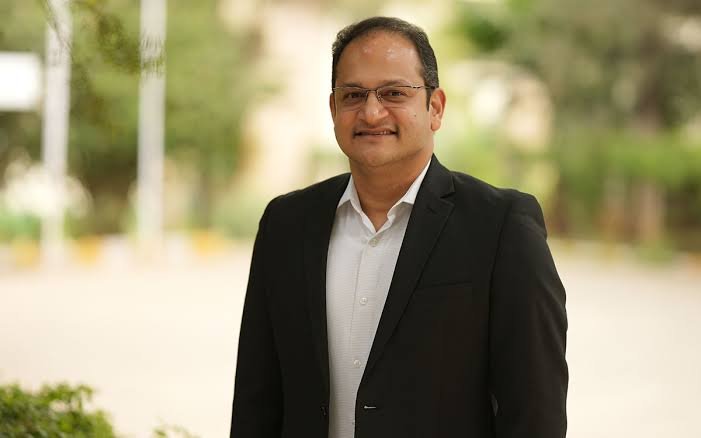
In an exclusive interview with Wealth Spark, Jaison Mathew, CEO of Christel House India, discusses the organisation’s 25-year journey of transforming lives through education, its holistic approach to breaking the cycle of poverty, and the importance of long-term investment in children’s futures.
As Christel House expands its presence in Pune and Thane, the challenge lies in scaling its model while remaining responsive to the needs of local communities. For Mathew, success goes beyond academic achievements—it means enabling children from underprivileged backgrounds to build independent lives, improve their families’ economic prospects and create opportunities for future generations.
Q1. Christel House India started in 2001 in Bengaluru; take us back to that very first year. What did the very first classroom, the very first batch of children, actually look like?
Christel House India opened in Bangalore in 2001 with 320 children. I joined the organisation in early 2002 and was able to be a part of the early years and several ‘firsts’ for the organisation.
The children came largely from under-resourced communities around the city. Several were the first in their families to attend school. Many arrived underweight, some had untreated health issues, and for all, English was an entirely new language.
What struck me was that the organisation was trying to do something quite simple in principle, but at the time it was not common to see it done at this depth. Christel DeHaan’s belief was that these children should have access to the same quality of education, nutrition, healthcare, and other support that any child should have, regardless of their family’s circumstances, and that their families should not have to pay for it.
Q2. Twenty-five years is a long time to stay committed to one mission. What keeps that fire alive for you and your team, even on the hard days?
The change to outcomes does. When a student who joined us in kindergarten tells us she has mapped out a path to becoming a chartered accountant, or when a parent who once worked as a daily wage worker watches his daughter win a state medal, the hard days are put in perspective.
What also sustains us is seeing that change carry forward. Our graduates come back to mentor current students, support younger cohorts, and speak to parents who may still be unsure about what is possible for their children. Seeing that happen, year after year, reminds us why sustained support matters. The impact is not just on one child; it begins to influence families and communities as well.
Q3. You talk about a ‘whole-child’ model: education, nutrition, healthcare, counselling, family support. In your own words, how would you explain to someone why education alone was never going to be enough?
I would put it simply. A hungry child and a troubled mind cannot learn. A child with untreated eyesight problems cannot read the board. These are not failures of teaching; they are barriers to learning.
We learnt this from our own students. One boy was falling ill often and could not focus in class. Our school nurse found that he was anaemic. Once he received the right nutritional and medical support, his attendance and participation changed. Another student had been falling behind until a routine vision screening identified a serious eyesight problem. A pair of spectacles made a visible difference to his classroom experience.
School alone was never going to be enough because the barriers children face are not always academic. If we can identify and address those barriers, we give children a much better chance to learn and progress.
Q4. Admissions here are based on evidence of poverty, not merit that’s such a powerful, deliberate choice. Can you share a moment or a child’s story that reminded you why that decision matters?
It was deliberate, and we have never diluted it. Our primary criterion is evidence of poverty. We look at household income, conduct a home visit to understand the family’s circumstances, and give preference to children from single-parent homes, orphanages, and shelters.
Girish is one of the students who reinforced why that decision matters. He joined us at five, the son of a construction painter, in a family where nobody had studied beyond middle school. By his own account, he was a playful, average student for many years. Today, he is the first lawyer in his family, practising in the High Court and lower courts of Karnataka, and he also takes on pro bono work in communities like the one he came from.
A merit-based admission test at the age of five would have excluded him.
Q5. An 18-year commitment to a single child, from kindergarten all the way through college and into their first job, what does that kind of long-term promise actually demand from an organisation like yours?
Mostly, it demands patience and systems, in that order. Patience, because the outcomes we care about do not show up in a single school year. They show up much later, when a young person is ready for higher education, enters the workforce, and begins to build an independent life. That is the point at which we know whether the support we provided has really made a difference.
Systems, because good intentions are not enough to sustain that commitment over many years. We start career development planning from Grade 5, and our College and Careers team stays connected with students through higher education and into employment. We track their qualifications, academic progress, employment and earnings, and continue regular check-ins until they are established and have broken the cycle of poverty.
It also requires financial predictability. If you tell a five-year-old that you will support them through college, that cannot be a promise you revisit every year. The organisation has to be built to honour that commitment.
Q6. You mention alumni working at companies like Amazon, KPMG, and Infosys today. Is there one graduate’s journey that still stays with you, that really captures what this work is all about?
Prabhu comes to mind often. He joined us when he was young, from a family with very little, completed his undergraduate degree in commerce, went on to pursue a master’s in international business abroad, and today works as a Vendor Manager in compliance at Wise Payments in Singapore.
For me, the most meaningful part is not the designation. It is seeing how far that journey has taken him. A child who grew up with very limited opportunities is now working on cross-border operations for a global company. And he still calls us to ask how he can contribute, or who he can speak to on our behalf. That tells you something about what the relationship means to him.
Sowmya is another student I think of often. She joined us at five, grew up in a single-parent home, studied biotechnology, and now works as a technical engineer at Hewlett-Packard. She once told us that Christel House gave her dreams and the courage and means to pursue them. That has stayed with me. Because ultimately, that is what we want for every child: not simply a good education, but the confidence and opportunity to decide what they want their life to look like.
Q7. The idea of a ‘multiplier effect’, one child’s success lifting an entire family and future generations, is beautiful. Can you paint us a picture of what that actually looks like in a real family’s life?
I have seen this happen in very tangible ways. Take Anthony Raj. Seven years ago, he was a daily wage labourer with very limited means and few opportunities for his children. Today, both his daughters are studying with us. Both are state-level gold medallists in sport and are now working towards competing at the national level. What has also changed is Anthony himself. His involvement with the school has changed the way he thinks about his daughters’ education and how he supports them at home.
There is another family that comes to mind as well. Salomi joined us when she was six and now works in Dubai, after starting her career with Cognizant. Both her elder sisters are also Christel House alumni. One is an engineer with Hewlett Packard Enterprise, and the other has completed her MBA. Their parents were a club cook and a domestic helper. To see three daughters go on to build very different lives for themselves is a powerful thing.
We see this reflected in the data as well. An independent impact assessment Deloitte conducted on us a few years ago found that our graduates earn 72 per cent more than the Karnataka per capita average and contribute 73 per cent of their household income. More than 90 per cent of their families had also moved to larger homes in better neighbourhoods. This underlines their social and economic mobility.
So the multiplier effect is not an abstract idea for us. You see it when one child’s education changes the opportunities available to an entire family, and eventually to the generation that follows.
Q8. As you expand into new cities like Pune and Thane, how do you make sure the heart of what Christel House stands for doesn’t get lost while you’re scaling?
Scaling is not about making every campus look the same. It is about making sure that the things that matter most to a child do not change because of where they live.
There are certain things we will always hold to the same standard: health and nutrition, counselling, academics, character development and life skills. Our quality team monitors these programmes across campuses, and our teachers have access to common training, resources and systems to track how students are progressing.
But the way we work with a community has to be local. The families and circumstances in Atal Nagar are different from those in Bangalore, just as Pune and Thane will have their own realities. Pune opened in April this year with 260 children, and Thane followed in June with 180. As these campuses grow, building trust with the local community will be just as important as delivering strong academic and life outcomes.
For me, scaling successfully means that a child in Thane receives the same quality of care, structure and opportunity as a child in Bangalore, while still having a school that understands the local community around them.
Q9. For someone reading this who wants to support a cause like yours but doesn’t know where to start, what would you tell them about the real, tangible difference their contribution makes?
I would tell them to come and see the work before they decide how they want to support it. Spend a day on one of our campuses, meet the children, speak to our teachers and, if possible, speak to a parent. It becomes much easier to understand what the contribution is making possible when you see the whole model.
For a child, it is not just a meal or a uniform or a set of books. It is all of those things, along with transport, healthcare, counselling and eventually support for higher education. These are the things that allow a child to stay in school and make the most of that opportunity.
And importantly, we are not asking a donor to fund a one-year intervention. The commitment is much longer. We are supporting a child from the time they enter school through higher education and into the workforce.
We also believe donors should be able to see where their money goes. Our financials are open to existing and prospective donors, and our founder has committed to covering the organisation’s administrative and fundraising costs in perpetuity.
The easiest way to understand the difference, though, is to spend time with the children. Once you have seen the school and understood what it means to a family, the numbers begin to have a very different meaning.
Q10. If you had to describe Christel House India’s journey so far in one sentence, not as a founder or an administrator, but simply as someone who’s watched thousands of children’s lives change, what would you say?
Twenty-five years of watching children who were never expected to finish school walk out as engineers, lawyers, and chartered accountants, and then turn around to lift the people they left behind.