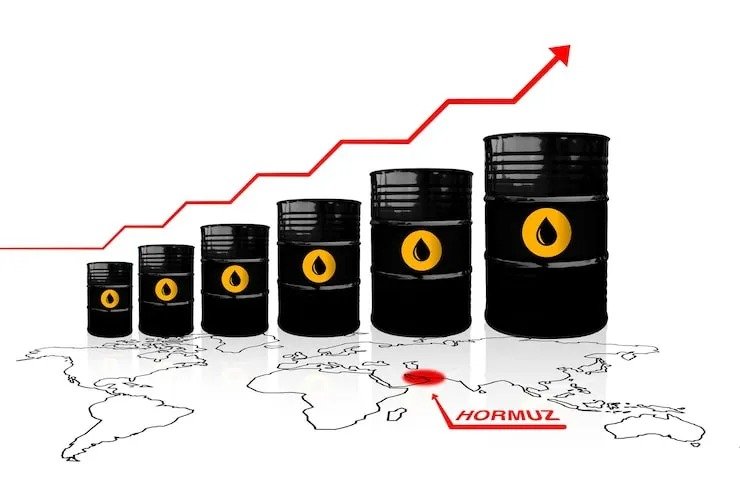
Oil prices rose while US equity futures and Treasury prices fell after President Donald Trump rejected Iran’s latest proposal to reopen the Strait of Hormuz.
The development has renewed concerns about tensions in the Middle East and the potential impact on global energy supplies. The Strait of Hormuz is a key route for international oil shipments, making any disruption there a major concern for energy markets.
Brent crude and US West Texas Intermediate both moved higher as traders assessed the possibility of a prolonged disruption to shipping through the waterway.
The move also affected financial markets. US stock-index futures weakened, while Treasury prices fell, pushing yields higher. Government bonds are often viewed as a safe-haven asset during periods of market stress, although concerns over inflation and energy prices can complicate that response.
The latest market moves come after weeks of uncertainty surrounding the conflict and its impact on the global economy. Higher oil prices could increase fuel and transportation costs and add to inflationary pressures in major economies.
The Strait of Hormuz, located between Iran and Oman, carries a significant share of the world’s seaborne oil trade. Any sustained interruption to shipments could therefore have consequences well beyond the region.
Investors are also watching developments in diplomatic efforts to restore the flow of commercial traffic. The rejection of Iran’s proposal has added to uncertainty over whether a wider agreement can be reached.
Analysts say the direction of oil prices will depend largely on the duration and scale of any disruption, as well as the response from major oil producers and governments.
For financial markets, the immediate focus remains on whether the latest escalation develops into a longer-running supply shock.
The renewed tensions come at a sensitive time for investors, who are already assessing interest-rate expectations, inflation risks and the outlook for global economic growth.